
So you’ve decided to go natural and are committed to the journey.
You’re watching the tutorials, reading the articles, and building your product stash, but your hair still won’t act right.
Sometimes it’s what you’re actively doing that works against your hair rather than for it.
Habits picked up from years of managing relaxed hair or shortcuts that feel logical in the moment, but cost you length and health in the long run.
In this post, I cover the 7 top things you need to stop doing to your transitioning hair starting today:-
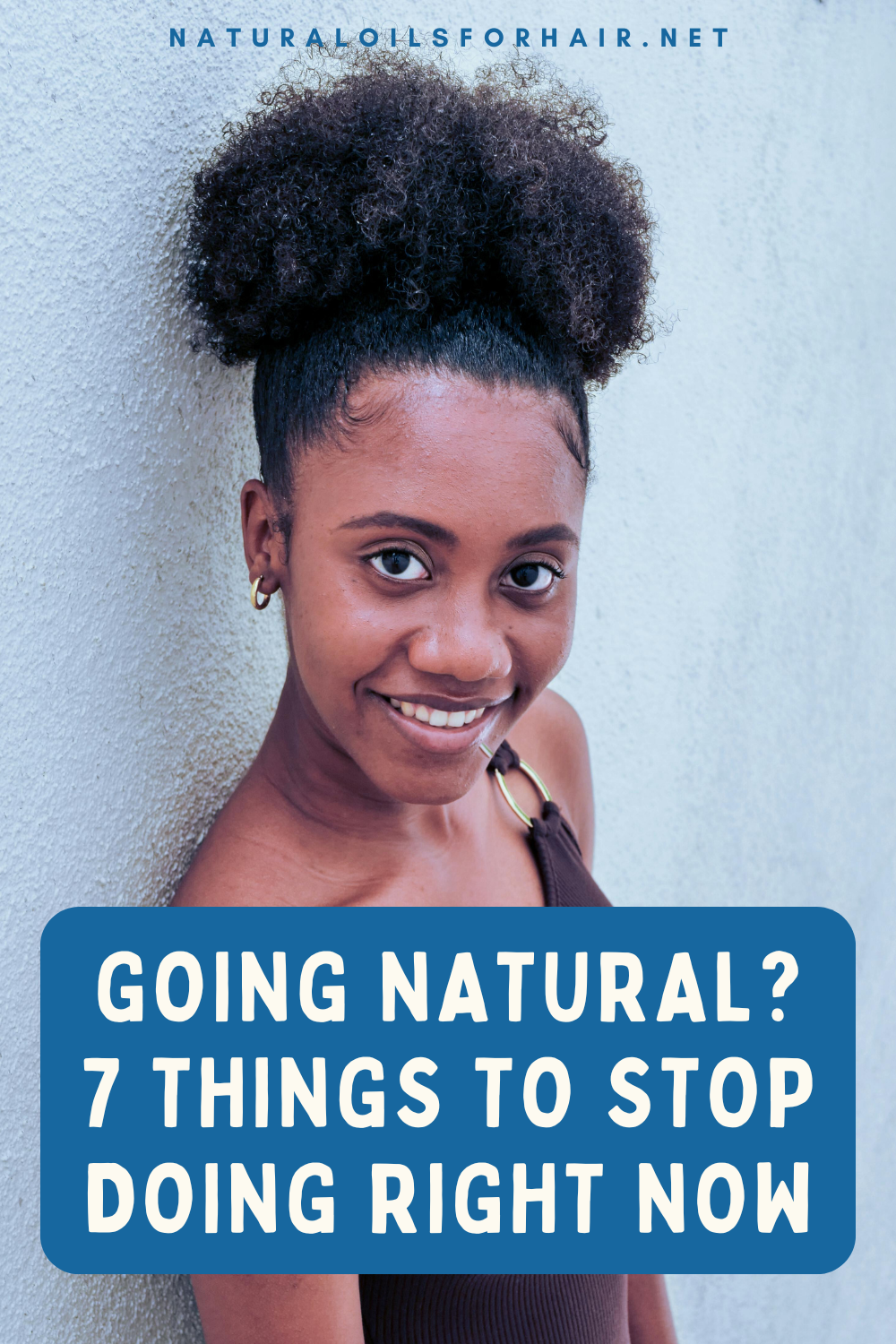
7 Don’ts of Transitioning to Natural Hair You Need to Know
1. Stop Detangling Dry Hair
Detangling is responsible for more transitioning hair breakage than almost anything else, and it is so ingrained in many women’s routines that they don’t even realize they’re doing it.
Detangling dry transitioning hair with two different textures creates enormous friction along the hair shaft and places massive stress on the line of demarcation.
That vulnerable point where your natural new growth meets your relaxed ends simply cannot withstand the tension of aggressive dry detangling without snapping.
Always detangle hair when it’s wet and well-conditioned. Apply a generous amount of conditioner or detangling product, work in sections, and use your fingers first before reaching for any tool.
Start at the ends and work your way up toward the roots. Slow detangling sessions save you far more length than rushed ones ever could.
2. Stop Using Heat Every Wash Day
Heat is not inherently evil. Used correctly and sparingly, it can be a useful tool in your transitioning toolkit for blending two textures, stretching new growth, or occasional styling variety.
Used every wash day, it becomes one of the fastest routes to heat damage, dryness, and breakage.
If you are currently flat-ironing, blow-drying on high heat, or using a hot comb every single wash day, your hair is telling you to stop, even if you haven’t listened yet.
The dryness, breakage, and ends that feel rough no matter how much you condition are warning signs.
Embrace heat-free styling methods such as twist-outs, braid-outs, Bantu knots, roller sets, banding, or African threading.
All these styles give you beautiful, stretched, and blended results without a single degree of heat.
Reserve heat for special occasions, always use a quality heat protectant, keep the temperature as low as possible, and pre-stretch before blow drying the rest of the way.
3. Stop Skipping Deep Conditioning
If your wash day routine does not include a deep conditioning treatment, you are missing the single most impactful step available to transitioning hair.
I’m referring to a proper deep-conditioning treatment that sits on your hair for at least 30 minutes and penetrates the hair shaft to restore moisture, strength, and elasticity.
Transitioning hair involves two very different textures and a compromised cuticle layer from years of chemical processing.
Deep conditioning addresses all of these things simultaneously. It is a weekly non-negotiable throughout your transition.
If budget is a concern, DIY deep conditioning recipes using simple kitchen ingredients work just as well as expensive salon formulas.
4. Stop Wearing Styles That Are Too Tight
Tight styles and transitioning hair are a dangerous combination. Braids and sew-ins installed too tightly or ponytails that pull too tightly can stress the edges.
When a style is too tight, the tension falls directly on the most vulnerable parts of your transitioning hair.
Your edges, nape, and line of demarcation all bear the brunt of excessive tension, resulting in traction alopecia, edge thinning, and breakage where you can least afford it.
Protective styles should feel comfortable from the moment they’re installed.
If your scalp is sore, you can see tension bumps along your hairline, or the style is giving you headaches, take it out immediately. No style is worth your edges.
5. Stop Neglecting Your Scalp
When you’re focused on managing two textures and protecting the line of demarcation, it is incredibly easy to forget about your scalp.
But a healthy scalp is the foundation of healthy hair growth, and neglecting it during your transition can slow your progress.
A dry, congested, itchy, flaky, or irritated scalp is not an optimal environment for new natural growth to thrive.
Regular scalp massages stimulate circulation and encourage healthy growth. Keeping the scalp clean removes the buildup that blocks follicles and inhibits growth.
Addressing common scalp issues with targeted treatments helps maintain a healthy environment for new hair growth.
Think of your scalp as the soil and your hair as the plant. Healthy soil produces healthy growth.
6. Stop Comparing Your Journey to Someone Else’s
This habit can be very damaging emotionally and can be quite hard to break in an era of social media and endless natural hair content.
But know this, your hair is not her hair, and your timeline is not her timeline. Your curl pattern, porosity, growth rate, and texture won’t look exactly like those of the woman in the video, photo, or comment section.
Measuring your journey against hers is a guaranteed path to frustration and quitting.
The natural hair community is a beautiful and generous space, but it can also create unrealistic expectations about transitioning.
Your journey is yours, and it will look exactly the way it should for your hair, lifestyle, and timeline.
7. Don’t Go the Transition to Natural Hair Journey Alone
Transitioning to natural hair without proper guidance and support makes it harder than it needs to be.
The information is out there, but wading through conflicting advice, outdated techniques, and well-meaning but harmful tips takes time and costs length.
Surround yourself with the right resources and the right community from the beginning, and your transition becomes a completely different experience.
Ready to Transition to Natural Hair the Right Way?
If you’re ready to stop working against your transitioning hair and start working with it, these resources give you everything you need:-
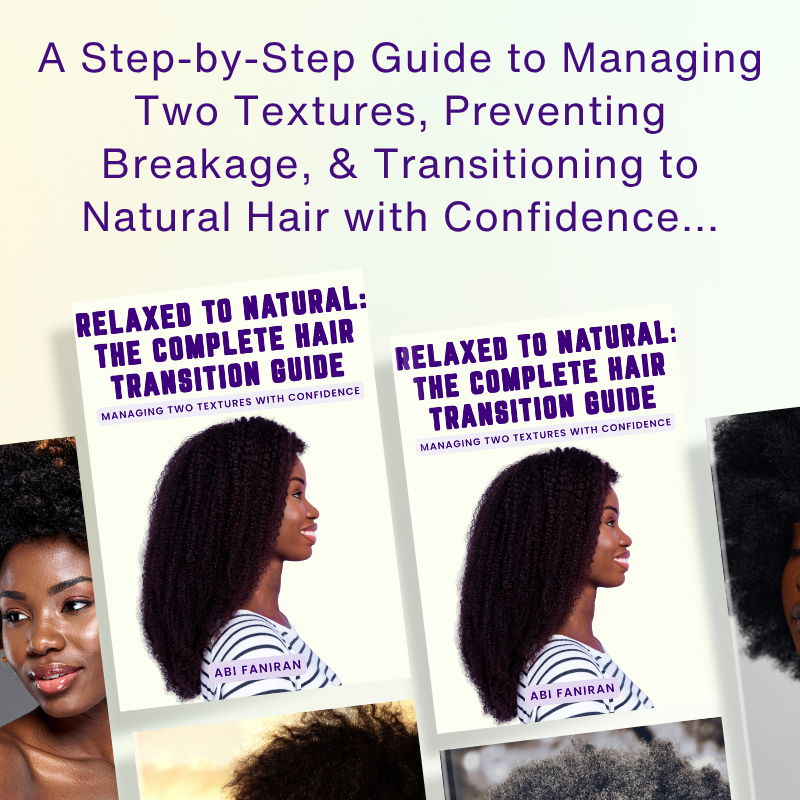
Relaxed to Natural: The Complete Hair Transition Guide is a practical and straightforward guide that walks you through every stage of your transition.
The guide enables you to manage two textures and transition to natural hair with confidence. Learn more here…
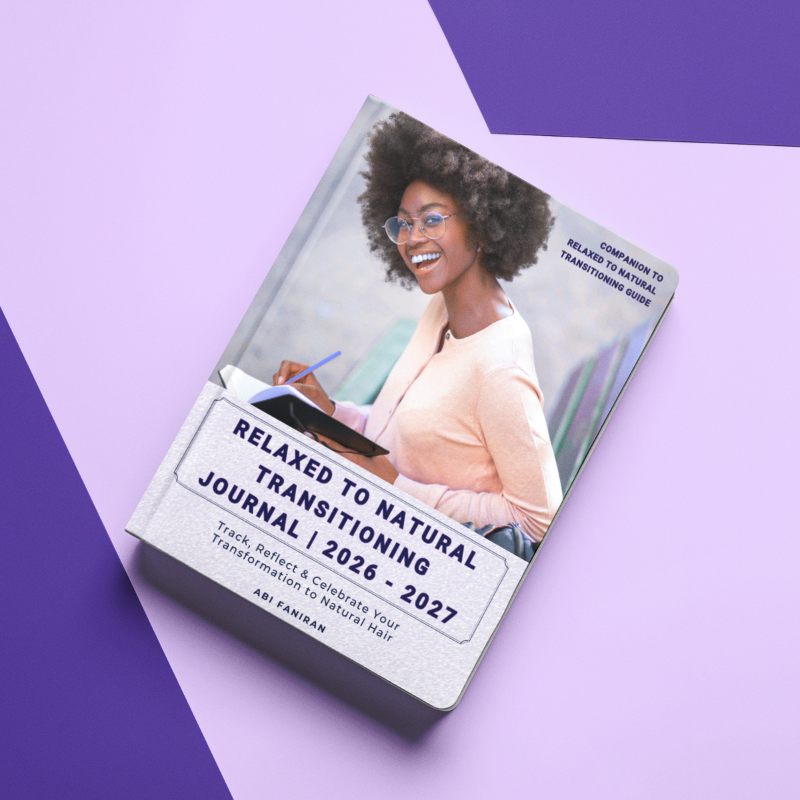
Relaxed to Natural Transitioning Journal gives you a full year of dedicated weekly tracking pages, quarterly check-ins, and reflection prompts.
You can document every step of your journey so you always know what’s working, what isn’t, and how far you’ve come. Learn more here…
Both are currently available for pre-order. Grab the guide, the journal, or the bundle and save.
Abi is a curly hair expert who delved into the world of natural oils after severe hair loss issues. Through her research, study, and testing, she was able to regrow her bald spots & a healthy head of hair. She is the founder of Healthy Natural Hair Products & Ade Ori Hair Care, and the author of the highly-rated Healthy Hair Care Series. She continues to study hair science, Ayurveda, and natural and healthy solutions for hair and skin. Learn more about our Editorial Guidelines…